
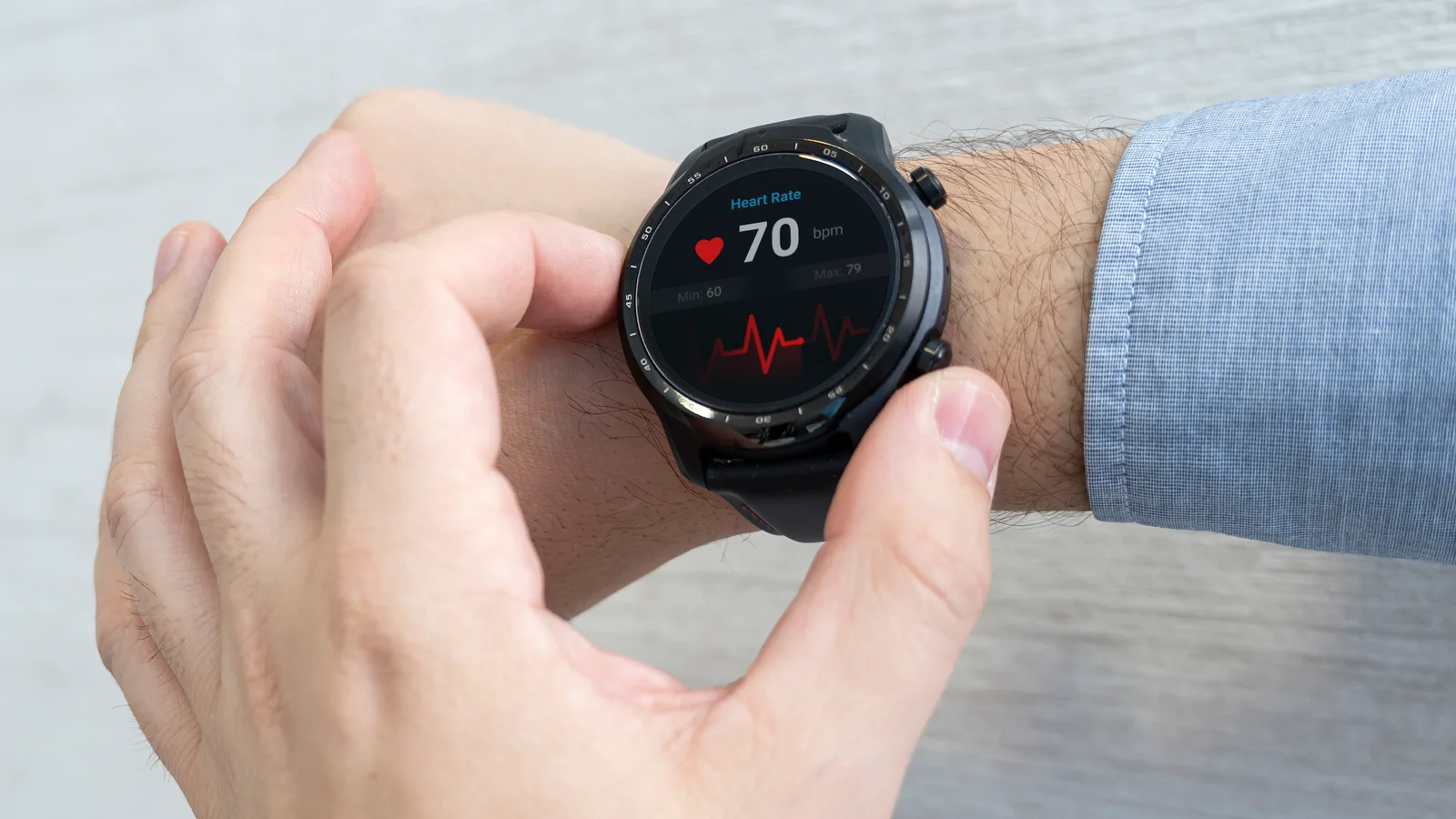
Your watch says 68 this morning and you would like it lower. Endurance training is the lever with the most controlled trials behind it. Across 121 controlled endurance comparisons in 2,924 exercisers, it took resting heart rate from 72.4 to 68.0 beats per minute, while the control groups barely moved [4]. Across all 215 comparisons the median dose was twelve weeks, three sessions a week [4]. That's how to lower resting heart rate. Below: why yours climbed, and the one claim the evidence doesn't support.
What your resting heart rate is actually telling you
Your heart has to move a certain volume of blood every minute to keep you alive at rest. It can do that with many small beats or fewer large ones. A lower resting heart rate usually means each beat is moving more blood, which is the same stroke volume that sits inside the VO2 max equation. I went through that equation in aerobic fitness and how long people live.
On a coaching call on 30 March 2026 I put it to a client like this. If your resting heart rate gets lower and lower over time, that is your heart becoming more efficient, and what we are increasing is stroke volume.
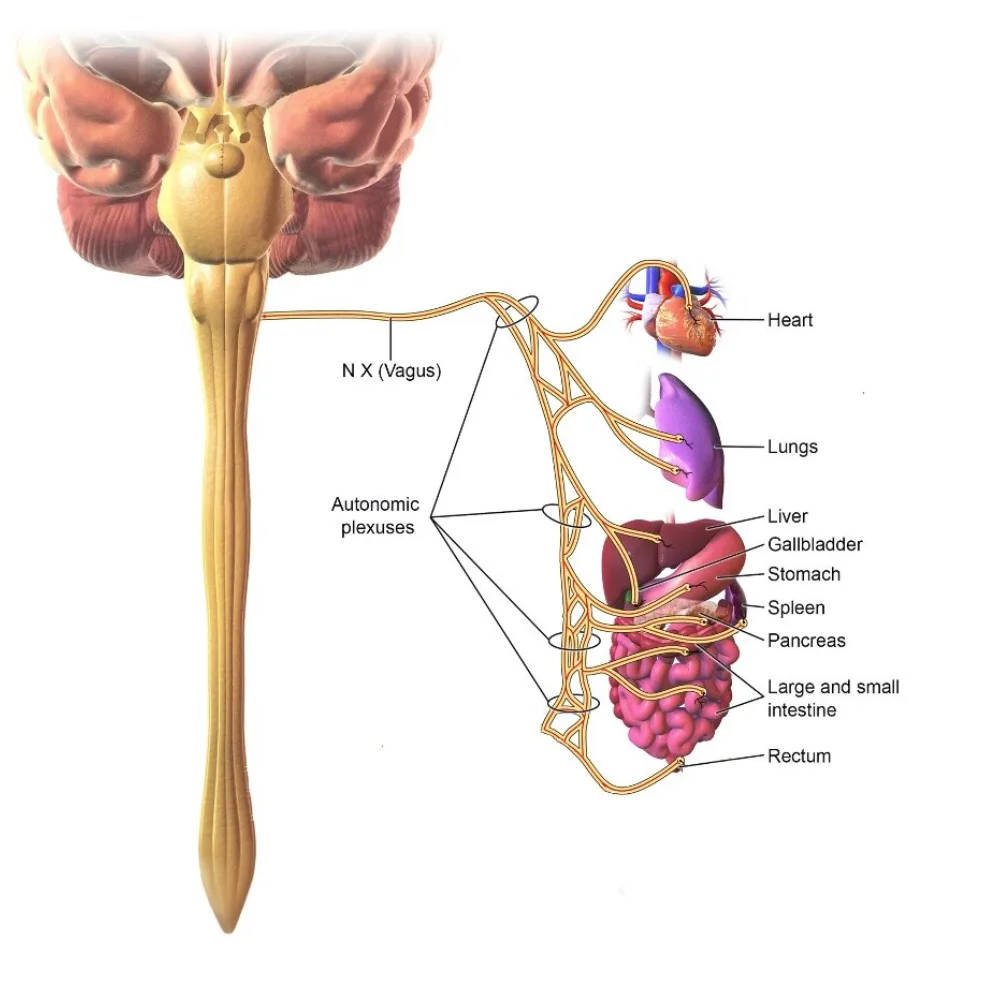
Now the honest complication, because this is where most articles stop. The mechanism is disputed in the literature. In 1980, researchers blocked both arms of the autonomic nervous system with drugs in trained and untrained men [7]. The trained men's hearts were still about 13 beats a minute slower, at rest and at every exercise intensity.
So an athlete's slow heart is not only vagal tone. In 2015 The Journal of Physiology ran a formal head to head on it [8]. One group argued the trained athlete's slow heart comes from high vagal tone. The other argued it comes from a change in a pacemaker channel in the sinus node. That exchange is where the question stood in 2015, and I haven't seen it settled since.
A meta-analysis of training trials points the same way. Across 12 studies, training lengthened the interval between beats with an effect size of 0.75 [6]. Across 13 studies, it raised the vagal high-frequency component with an effect size of only 0.48. The authors concluded that factors beyond vagal modulation are responsible for training bradycardia.
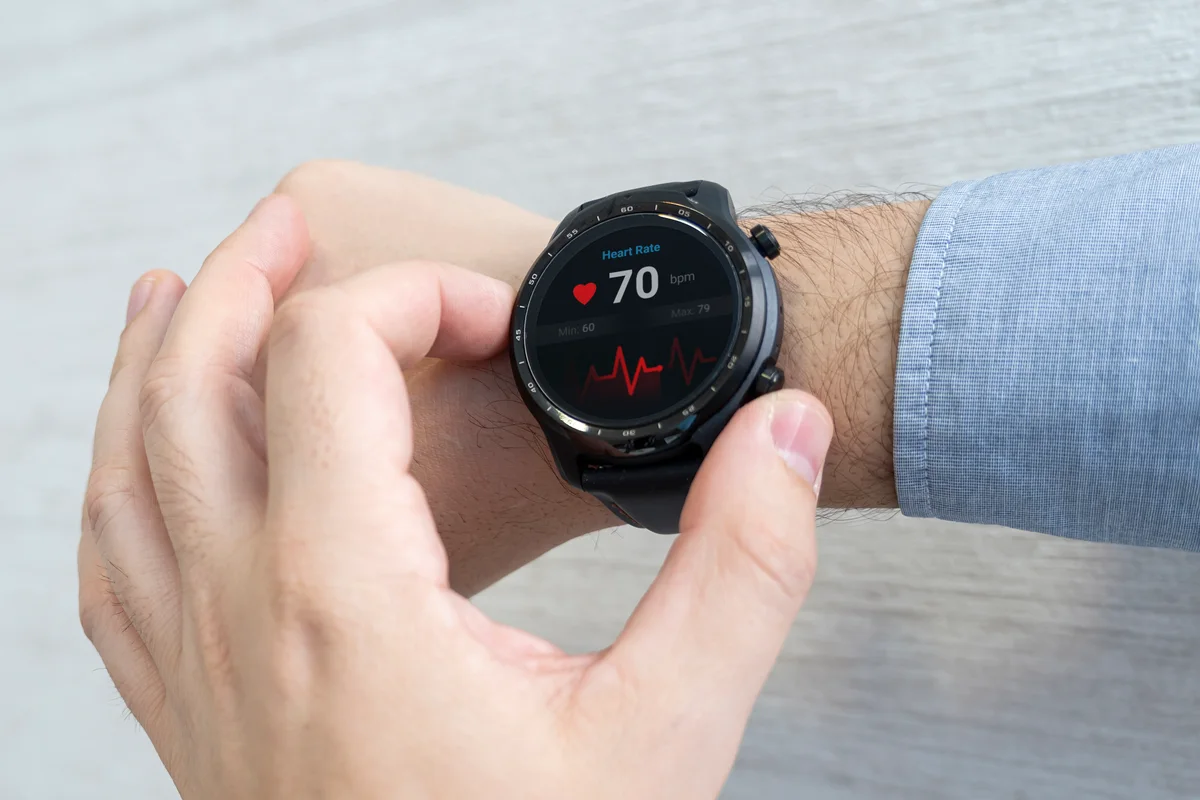
Why is my resting heart rate so high all of a sudden?
Most of the time it isn't. It's the normal week to week wobble, and you happened to look. In 92,457 US adults wearing a Fitbit for a median of 320 days, most people had a median weekly swing of only 3 beats per minute [9]. About 80 percent never saw a week move by 10 or more.
There is a seasonal swing too, and it is small. Across that whole population the average moved 2 beats per minute over the year [9]. It peaked in the first week of January and bottomed at the end of July.
The same study found the lowest resting heart rates sat with about 7 to 7.5 hours of sleep a night [9]. The lowest also sat with a body mass index of 21 in women and 23 in men. Those are associations, not a prescription. They come from people who bought a Fitbit, and the numbers are that company's own algorithm run on its own data. But they line up with what I see on a dashboard every week.
So the rule I give clients is simple. One high morning is noise. A week that sits 5 or more beats above your own normal, with a reason you can name, is worth reading. A run of high weeks with no reason is worth a conversation with your physician, not a harder training block.
What does a high resting heart rate mean for your heart?
It is associated with dying sooner, and the association survives adjustment for how fit you are. That last part is what makes it interesting rather than just another proxy for fitness.
The cleanest test of it followed 2,798 healthy Danish men for 16 years, with their VO2 max measured on a bicycle ergometer [3]. The fully adjusted model accounted for that measured VO2 max, leisure-time activity, smoking, weight, blood pressure and social class. In it, every 10 beats per minute carried 16 percent higher all-cause mortality. One caveat I won't bury: the VO2 max was measured in 1970 to 1971 and the heart rate in 1985 to 1986, about fifteen years apart.
Two things about that chart. The end groups are thin, 222 men under 50 bpm and 54 above 90, so the extremes are the least certain part of it. And the authors' own reading is that a raised resting heart rate is not merely a marker of poor general fitness but an independent risk factor [3]. It is still an observational cohort, so the verb is "was associated with".
How big is the effect across all the evidence? Contested, and I would rather show you that than pick the biggest number. A meta-analysis of 46 cohorts, 1,246,203 people and 78,349 deaths, found 9 percent higher all-cause mortality per 10 beats per minute [1]. The same paper detected publication bias and reported its own corrected estimate: 4 percent.
A larger review of 87 prospective studies put it at 17 percent per 10 beats per minute across 48 studies [2]. Its heterogeneity statistic for that figure was 94 percent, which means the studies disagree with each other almost completely about the size. So: the direction is consistent, the magnitude is not.
For scale, a national survey measured the resting pulse of 14,200 US adults by hand, after four minutes sitting quietly [11]. The mean was 71 beats per minute for men and 74 for women, and 15.2 percent of adult men measured under 60. A number in the sixties is not unusual. It is roughly the middle of the pack.
How to lower resting heart rate with training, and how fast?
Yes, and this is the part with actual controlled trials rather than cohorts. A 2018 meta-analysis pooled 191 studies and 215 comparisons in healthy people, 6,763 exercisers against 6,189 controls, and split them by the kind of training [4].
Endurance training took resting heart rate from 72.4 to 68.0 beats per minute, a fall of 6.0 percent, while the control groups went from 72.3 to 71.9 [4]. Yoga did slightly more, 76.1 to 70.4. Strength training alone did much less, 69.1 to 67.8. Only endurance training and yoga moved it significantly in both sexes.
The dose is the useful part. Those interventions ran a median of 12 weeks, three sessions a week, 36 sessions in all [4]. The men-only endurance comparisons fell further than the women-only ones, 9.0 percent against 5.2 percent, across 36 and 35 comparisons.
One finding decides whether this is worth your time. The higher your starting resting heart rate, the bigger your drop, with a correlation of minus 0.36 across all 215 comparisons [4]. If you are at 78, there is a lot of room. If you are already at 54, the same twelve weeks will give you far less, and that is the paper's own finding, not my caution.
What I ask for is unglamorous. On that same March call I gave a client three things. Nasal breathing while exercising, more low-intensity cardio, and a brisk walk with the mouth closed. He asked whether a walk counted. It does, as long as it's brisk and you keep breathing through your nose.
And it is completely bio-individual. The zone I set for that client was a band in beats per minute, picked for him, not a general range off a chart. Yours comes from your own numbers, your sleep and what your week can actually hold.
Does bringing it down actually buy you anything?
This is the question almost nobody answers honestly, so here's what I found. Nothing in this evidence shows that lowering your resting heart rate lowers your risk of dying.
The study that comes closest measured resting heart rate twice, about ten years apart, in 29,325 Norwegians with no known cardiovascular disease [5]. It then followed them for a mean of 12 years. People whose rate rose from under 70 to above 85 had roughly double the risk of dying of ischaemic heart disease. That is an adjusted hazard ratio of 1.9, and its confidence interval touches 1.0.
And the fall? The authors put it plainly: the association of change with mortality was not linear, and a decrease in resting heart rate showed no general mortality benefit [5].
One thing I'd rather you heard from me. Zhang's meta-analysis of 46 cohorts also ran a spline against a 70 bpm reference, where rates of 45 to 69 were associated with lower all-cause mortality [1]. Its own word for that was protective. It's still observational, and still nobody lowered anything. That Norwegian result is one cohort, with 388 deaths from ischaemic heart disease, which is a small number of events. It doesn't mean bringing the number down does nothing. It means the rising number was the signal, and nobody has shown that moving the number is itself the benefit.
So why do I still train it? Because the things that lower it are the things worth doing anyway. Endurance volume, sleep, less alcohol and a lower body weight all move it, and all of them have their own evidence. The resting heart rate is how I watch whether those changes are landing. It isn't the reason for making them.
What one evening of drinking does to it
More than most people expect, and it starts at a dose most people would call nothing. A study of 4,098 Finnish employees compared each person's nights after drinking against their own nights without, using continuous beat to beat recordings [10].
Alcohol was associated with more sympathetic activity, less parasympathetic activity and poorer overnight recovery, in a dose-dependent way. The effect appeared at low doses too, defined there as 0.25 grams per kilogram of body weight or under. Their recovery measure is a company's own composite index, and two of the authors work for that company. Take the direction seriously and the exact percentages with salt.

One finding is worth correcting, because it gets repeated the wrong way round. The effect was similar in physically active and sedentary people [10]. What was stronger was the effect in younger people, and in people whose baseline sleeping heart rate was already low. Being fit does not exempt you.
Sleep does the same job in reverse. The tracker study found the lowest resting heart rates at about 7 to 7.5 hours [9]. I covered what a short night does to your physiology with Dr. Jay Khorsandi. If you want a lever you can pull tonight rather than in twelve weeks, it is these two.
One client: Fernando Cuartas
Fernando's case study, a resting heart rate from 62 to 53 is on this site. His resting heart rate went from 62 to 53 beats per minute over the programme, alongside 22 pounds lost. His total testosterone moved from 515 to 791 nanograms per decilitre.
His drop is far larger than the 72.4 to 68.0 the endurance trials averaged. Worth saying why rather than presenting it as typical. He also lost a significant amount of weight, and he started at 62 rather than at 54. That is exactly where the meta-analysis says the room is.
A case study isn't a trial. There was no control group, nobody was blinded, and Fernando is a motivated man with a coach reading his data every week. The literature carries the mechanism; his story shows one application of it. The results presented reflect one individual's outcome and should not be interpreted as typical.
How to lower resting heart rate: the next twelve weeks
- Write down your own baseline before you change anything. Take the average of a full week from the same device, not the lowest night you can find.
- Put in three endurance sessions a week and hold them for twelve weeks. That is the dose the trials actually used, a median of 36 sessions [4].
- Keep most of them low intensity, and breathe through your nose while you do them. Both are rules I use on coaching calls, not findings from the trials, which pooled every intensity.
- Count the drinks. Alcohol was associated with worse overnight recovery even at low doses, and being fit did not protect anyone [10].
- Aim for 7 to 7.5 hours of sleep, where the lowest resting heart rates sat in 92,457 adults [9].
- Ignore single mornings. A median week to week swing is 3 beats per minute, so read weekly averages instead [9].
- Expect less if you start low. The drop shrinks as the baseline falls, with a correlation of minus 0.36 [4].
- Take a resting heart rate that keeps climbing for no reason to your physician rather than to your training plan.
This is not medical advice. I'm Andrés Preschel, a physiologist and the founder of Know Your Physio, not a doctor. A resting heart rate that is persistently very fast or very slow is a question for a physician. So is one that comes with dizziness, breathlessness or palpitations.
Quick answers
How long does it take to lower your resting heart rate?
About twelve weeks at three sessions a week, on the evidence we have. A meta-analysis of 215 controlled comparisons in healthy people used a median of 12 weeks and 36 sessions [4]. In its 121 endurance comparisons, resting heart rate fell from 72.4 to 68.0 beats per minute [4]. The control groups went from 72.3 to 71.9 over the same period. How much you get depends on where you start: the higher your baseline, the larger the fall, with a correlation of minus 0.36 across all the comparisons.
Is a resting heart rate of 90 too high?
It is well above average and it sits in the band the cohorts flag. In a national survey of 14,200 US adults measured by hand, the mean was 71 for men and 74 for women [11]. In 2,798 Danish men followed 16 years, the 81 to 90 band carried roughly twice the risk of death of the under-50 group [3]. Above 90 it was roughly three times, after adjusting for measured fitness. That is an association in observational data, not a verdict on you, and a persistently high reading belongs in front of a physician.
Does alcohol raise your resting heart rate?
Yes, and at lower doses than most people assume. A study of 4,098 Finnish employees compared each person against their own alcohol-free nights [10]. Drinking was associated with more sympathetic and less parasympathetic activity in the first hours of sleep. The effect was dose-dependent and present even at low intake. The effects were similar in physically active and sedentary people, so training does not exempt you. Note the recovery index is the data provider's own measure and two authors work for that company.
Why did my resting heart rate go up overnight?
Usually noise. Among 92,457 adults tracked for a median of 320 days, the median week to week swing was 3 beats per minute [9]. About 80 percent never had a week move by 10 or more. There is also a seasonal pattern worth about 2 beats per minute, peaking in the first week of January. Alcohol, a short night, illness and a late heavy meal all show up the next morning. Read weekly averages, not single days.
Can you lower your resting heart rate without cardio?
A little. In the same meta-analysis, strength training alone moved resting heart rate from 69.1 to 67.8 beats per minute [4]. That is a fall of 2.5 percent, against controls that did not move. Yoga did more than endurance work in that pooled analysis, 76.1 to 70.4, a fall of 7.2 percent, though its control groups also fell 2.0 percent. Tai chi did not reach statistical significance. Only endurance training and yoga moved it significantly in both men and women.
When should a high resting heart rate send me to a doctor?
When it stays high without an explanation you can name, or when it comes with symptoms. The clinical convention treats a resting pulse above 100 beats per minute as tachycardia and below 60 as bradycardia [11]. A revised set of thresholds used in the same national survey puts them at 90 and 50. Dizziness, breathlessness, chest discomfort or palpitations alongside a changed resting heart rate are for a physician, today, not for a training plan. I am a coach, not the person who diagnoses.
If you would rather have your numbers read against your own baseline than against a chart, that is what a call with me is for. Forty five minutes on where you are, what you have tried and what a plan would look like. And I went deeper on the fitness side of this with Jeroen Molinger on episode 68 of the podcast. Discover your science. Optimize your life.
Supporting Evidence
- Zhang, D., Shen, X., & Qi, X. (2016). Resting heart rate and all-cause and cardiovascular mortality in the general population: a meta-analysis. CMAJ, 188(3), E53-E63. Competing interests: none declared. Read 30 September 2026. doi:10.1503/cmaj.150535
- Aune, D., Sen, A., ó'Hartaigh, B., Janszky, I., Romundstad, P. R., Tonstad, S., & Vatten, L. J. (2017). Resting heart rate and the risk of cardiovascular disease, total cancer, and all-cause mortality: a systematic review and dose-response meta-analysis of prospective studies. Nutrition, Metabolism and Cardiovascular Diseases, 27(6), 504-517. Read 30 September 2026. doi:10.1016/j.numecd.2017.04.004
- Jensen, M. T., Suadicani, P., Hein, H. O., & Gyntelberg, F. (2013). Elevated resting heart rate, physical fitness and all-cause mortality: a 16-year follow-up in the Copenhagen Male Study. Heart, 99(12), 882-887. Funded by the King Christian X Foundation, the Danish Medical Research Council, the Danish Heart Foundation and the Else and Mogens Wedell-Wedellsborg Foundation; competing interest: none. Read 30 September 2026. doi:10.1136/heartjnl-2012-303375
- Reimers, A. K., Knapp, G., & Reimers, C. D. (2018). Effects of exercise on the resting heart rate: a systematic review and meta-analysis of interventional studies. Journal of Clinical Medicine, 7(12), 503. Funded by Chemnitz University of Technology with the German Research Foundation, grant 392676956; the authors declare no conflict of interest. Read 30 September 2026. doi:10.3390/jcm7120503
- Nauman, J., Janszky, I., Vatten, L. J., & Wisløff, U. (2011). Temporal changes in resting heart rate and deaths from ischemic heart disease. JAMA, 306(23), 2579-2587. Read 30 September 2026. doi:10.1001/jama.2011.1826
- Sandercock, G. R., Bromley, P. D., & Brodie, D. A. (2005). Effects of exercise on heart rate variability: inferences from meta-analysis. Medicine and Science in Sports and Exercise, 37(3), 433-439. Read 30 September 2026. doi:10.1249/01.mss.0000155388.39002.9d
- Lewis, S. F., Nylander, E., Gad, P., & Areskog, N. H. (1980). Non-autonomic component in bradycardia of endurance trained men at rest and during exercise. Acta Physiologica Scandinavica, 109(3), 297-305. Read 30 September 2026. doi:10.1111/j.1748-1716.1980.tb06600.x
- Coote, J. H., & White, M. J. (2015). CrossTalk proposal: bradycardia in the trained athlete is attributable to high vagal tone. The Journal of Physiology, 593(8), 1745-1747. The opposing view, by D'Souza, Sharma and Boyett, appears at pages 1749-1751 of the same issue. Read 30 September 2026. doi:10.1113/jphysiol.2014.284364
- Quer, G., Gouda, P., Galarnyk, M., Topol, E. J., & Steinhubl, S. R. (2020). Inter- and intraindividual variability in daily resting heart rate and its associations with age, sex, sleep, BMI, and time of year: retrospective, longitudinal cohort study of 92,457 adults. PLOS ONE, 15(2), e0227709. The data are Fitbit's own, mostly Charge HR 1 to 3, and resting heart rate came from Fitbit's proprietary formula. The authors declared no competing interests. Read 30 September 2026. doi:10.1371/journal.pone.0227709
- Pietilä, J., Helander, E., Korhonen, I., Myllymäki, T., Kujala, U. M., & Lindholm, H. (2018). Acute effect of alcohol intake on cardiovascular autonomic regulation during the first hours of sleep in a large real-world sample of Finnish employees. JMIR Mental Health, 5(1), e23. Two authors are employed by the company whose recording technology produced the data and whose recovery index is the outcome measure. A third works for Nokia Technologies. Funded by TEKES. Read 30 September 2026. doi:10.2196/mental.9519
- Ostchega, Y., Porter, K. S., Hughes, J., Dillon, C. F., & Nwankwo, T. (2011). Resting pulse rate reference data for children, adolescents, and adults: United States, 1999-2008. National Health Statistics Reports, 41, 1-16. National Center for Health Statistics, CDC. Read 30 September 2026. pubmed.ncbi.nlm.nih.gov/21905522/