
Your watch gave you a VO2 max number this morning. Mine did too. That number deserves more attention than your step count. In two of the largest studies run on it, 872,309 adults between them, the least fit died at four to five times the rate of the fittest. This is what VO2 max and longevity have to do with each other. What the number measures, what the studies found, where you sit for your age, and how a busy adult moves it.
What VO2 max actually measures
VO2 max is the largest amount of oxygen your body can take in and use in a minute, divided by your body weight. The unit is milliliters of oxygen per kilogram per minute, written ml/kg/min. Think of it as the size of your engine, measured while you're working as hard as you can.
The equation behind it is short. VO2 max equals cardiac output multiplied by the difference in oxygen between the blood leaving your heart and the blood coming back. Cardiac output is your heart rate multiplied by your stroke volume, which is how much blood leaves the heart with every beat. I've explained it the same way on the podcast for years. It's a picture of your whole system, from how well the heart pumps to how much your muscles use of what it pumps.
That equation tells you where the lever is. Your maximum heart rate is mostly set by age. Stroke volume isn't. In the classic Norwegian interval trial, eight weeks of four-minute intervals raised stroke volume by about 10 percent, and the VO2 max gains tracked it [1].
When I train a client's VO2 max, I'm training the heart to move more blood per beat. The muscle side of the equation matters too, which is why I keep protein and muscle in the same conversation. So does the way you breathe, which I covered with Patrick McKeown in the recap on breathing and oxygen delivery.
VO2 max and longevity: what the mortality studies found
VO2 max is one of the strongest single predictors of how long you live. Two of the largest cohorts, 122,007 Cleveland Clinic patients and 750,302 US veterans, found the same thing. The least fit died at four to five times the rate of the fittest. That gap was wider than smoking, diabetes or heart disease carried in the same models. The numbers follow, because a statistic should never stand alone.
In 2018, the Cleveland Clinic published a cohort, a group of people followed over time, of 122,007 patients. Each had done a treadmill test between 1991 and 2014, and they were followed for a median of 8.4 years [2]. Compared with the fittest 2.3 percent, the least fit quarter died at about five times the rate: an adjusted hazard ratio of 5.04. A hazard ratio is one group's rate of death divided by another's, after the model has adjusted for age, sex and the usual risk factors.
In the same model, smoking carried 1.41, diabetes 1.40 and coronary artery disease 1.29. Being below average in fitness, against being above average, carried 1.41, the same as smoking. The authors' own sentence: "Cardiorespiratory fitness is inversely associated with long-term mortality with no observed upper limit of benefit."
Four years later a cohort of 750,302 US veterans aged 30 to 95, followed for a median of 10.2 years, found the same shape [3]. Its least fit fifth carried four times the risk of death of the extremely fit, a hazard ratio of 4.09. The lowest risk sat at about 14 METs, and there was no sign that extreme fitness pushed risk back up. A MET is a unit of exercise capacity; one MET is 3.5 ml/kg/min of oxygen, the standard conversion the Cleveland paper itself uses [2]. In the authors' words, "Being unfit carried a greater risk than any of the cardiac risk factors examined."
Those are two big cohorts. The meta-analyses agree. A 2009 pooling of 33 cohort studies covered 102,980 people. Each extra MET of fitness was tied to a 13 percent lower risk of death from any cause [4]. That's one small step on the scale.
Twenty-six systematic reviews, drawing on 199 cohort studies, were pooled in a 2024 overview. It put high fitness against low at a hazard ratio of 0.47 for all-cause death, and each MET was worth 11 to 17 percent [5]. The same overview graded the certainty of that evidence from very low to moderate, and I'd rather you hear that from me than not at all.
Each unit of VO2 max was worth 45 days of life
The study I find most useful for a person in midlife is Danish. In 1970 and 1971, 5,107 employed men with an average age of 48.8 had their VO2 max estimated on a bicycle. Forty-six years later, 92 percent of them had died, so the record is nearly complete [6].
Men above the upper limit of normal fitness at 48 lived on average 4.9 years longer than men below the lower limit. Each single unit of VO2 max was worth about 45 days of life. The result held when the authors removed everyone who died in the first ten years, which is the check for whether early illness was driving the numbers.
Two honest caveats. First, every mortality study here is observational, so the right verb is "was associated with", not "causes". Fit people differ from unfit people in many ways the models can't fully remove.
Second, most of these cohorts estimated fitness from treadmill time rather than measuring oxygen. One cohort measured it directly with gas analysis: 4,137 healthy adults followed for about 24 years. Low fitness still carried a hazard ratio of 1.73 for death against high fitness [7].
The American Heart Association weighed all of this in 2016 and asked doctors to treat fitness as a clinical vital sign [8]. I went deeper on the athlete side of this with Jeroen Molinger on episode 68 of the podcast.
Where you sit: VO2 max by age and sex
A number means nothing until you place it. The best reference I know is the FRIEND registry, 7,783 maximal treadmill tests with gas analysis, from US adults aged 20 to 79 without cardiovascular disease [9]. These are measured values, not estimates. Here are the 25th, 50th and 75th percentiles by decade; the 90th and 95th rows are in the same paper.
| Age | Men 25th | Men 50th | Men 75th | Women 25th | Women 50th | Women 75th |
|---|---|---|---|---|---|---|
| 20 to 29 | 40.1 | 48.0 | 55.2 | 30.5 | 37.6 | 44.7 |
| 30 to 39 | 35.9 | 42.4 | 49.2 | 25.3 | 30.2 | 36.1 |
| 40 to 49 | 31.9 | 37.8 | 45.0 | 22.1 | 26.7 | 32.4 |
| 50 to 59 | 27.1 | 32.6 | 39.7 | 19.9 | 23.4 | 27.6 |
| 60 to 69 | 23.7 | 28.2 | 34.5 | 17.2 | 20.0 | 23.8 |
| 70 to 79 | 20.4 | 24.4 | 30.4 | 15.6 | 18.3 | 20.8 |
So, is a VO2 max of 45 good? For a man in his forties it's the 75th percentile. For a man in his fifties it sits near the 90th. For a woman in her forties, 45 is above the 95th percentile. Is 42 good? For a man in his thirties it's the median; for a man in his fifties it's well above the 75th.
Is 50 or 52 good? For a man in his twenties, 50 sits between the median and the 75th percentile. For a man in his forties, and for a woman of any age on this table, both are above the 75th. Read 44 the same way as 45.
The same number is ordinary at 30 and excellent at 55, which is why I never read a VO2 max without the age and sex beside it.
Two notes on the table. An update in 2022 added 22,379 tests from 34 laboratories. Its treadmill standards came out 1.5 to 4.6 ml/kg/min lower than the 2015 rows above, with a decline of about 13.5 percent per decade [10]. Treat the table as a little generous. And the targets on our homepage (a VO2 max of 45 or more, from a starting 36) are our own numbers, not research. A client who moves from 36 to 45 ml/kg/min has gone from about the median to the 75th percentile, for a man in his forties.
Why the number falls with age, and why that isn't a sentence
VO2 max falls with age in everyone, but not at a steady rate. The Baltimore Longitudinal Study of Aging tested 810 healthy adults repeatedly over a median of 7.9 years [11]. Decline ran at 3 to 6 percent per decade in the twenties and thirties, then accelerated to more than 20 percent per decade in the seventies. It was steeper in men than in women from the forties onward, and it showed up in every quartile of self-reported activity.
Most of the fall tracked the oxygen carried per heartbeat, not maximal heart rate, which dropped only 4 to 6 percent per decade. Here is the part that matters. The change in your number predicts your outcome, not just the number itself. In a Finnish cohort of 579 men aged 42 to 60, VO2 max was measured with gas analysis twice, eleven years apart. The men were then followed for a median of 13.3 years [12]. Every 1 ml/kg/min a man held on to was associated with a 9 percent lower risk of death. The average man lost 5.2 ml/kg/min over the eleven years. Holding your number is itself a result.
And it can be moved late. Sixty-one healthy, sedentary adults averaging 53 years old were randomized in Dallas, and 34 of them trained for two years [13]. VO2 max rose 18 percent, from 29.0 to 34.4 ml/kg/min, and the stiffness of the heart's main chamber fell. Controls drifted from 29.5 to 28.7. That starting point of 29 is close to the median for a man in his sixties and below it for a man in his fifties.
Is VO2 max genetic?
Partly. The starting point is, and I haven't reviewed the heritability literature for this article, so I won't put a percentage on it. What the trials show is that the trainable part is large. A meta-analysis of 37 interval-training studies found "marked increases in VO2max in almost all relatively young adults" [14]. Your genes set the floor. Your training sets how far above it you live.
Is the VO2 max on your Apple Watch or Garmin accurate?
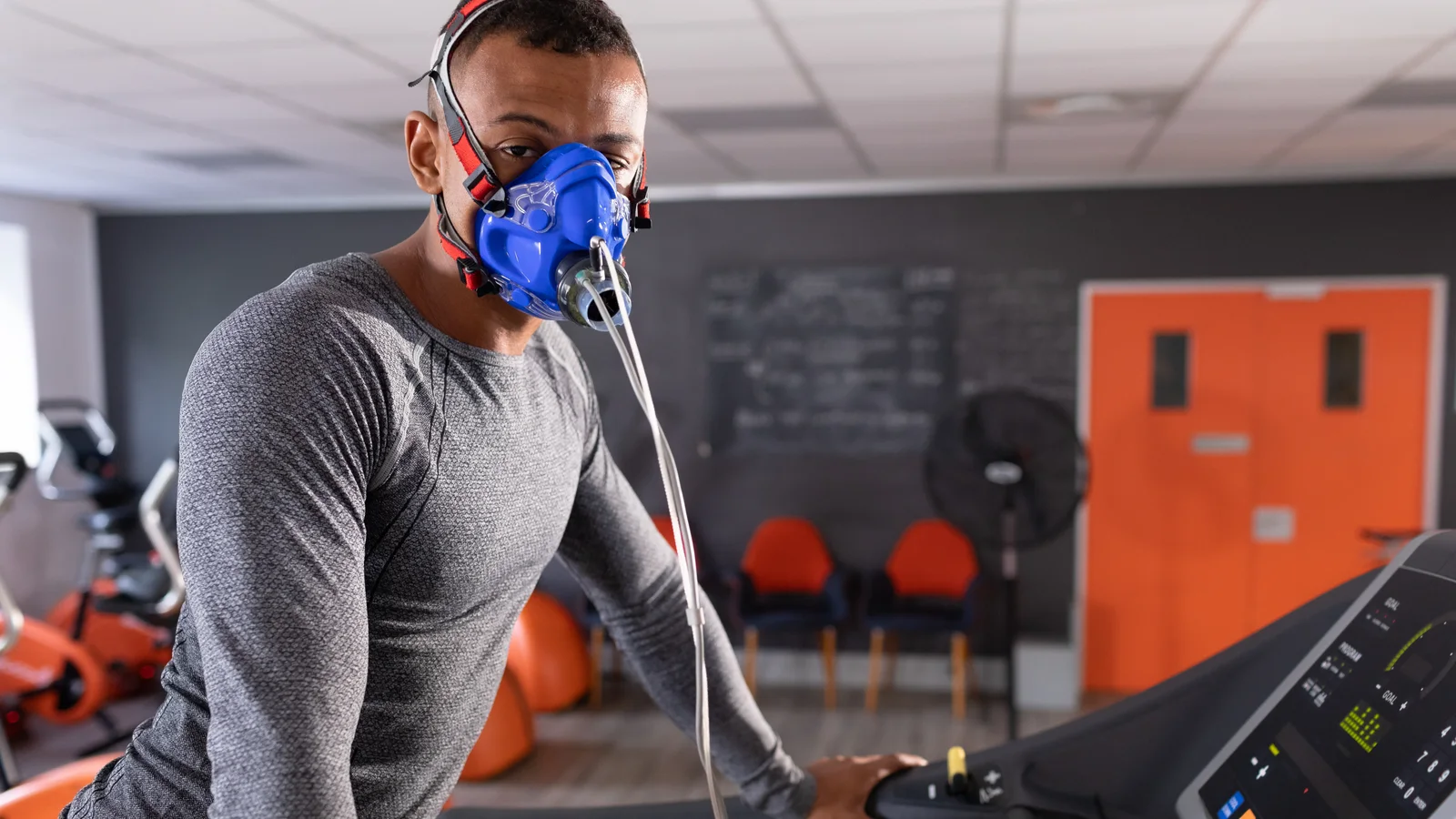
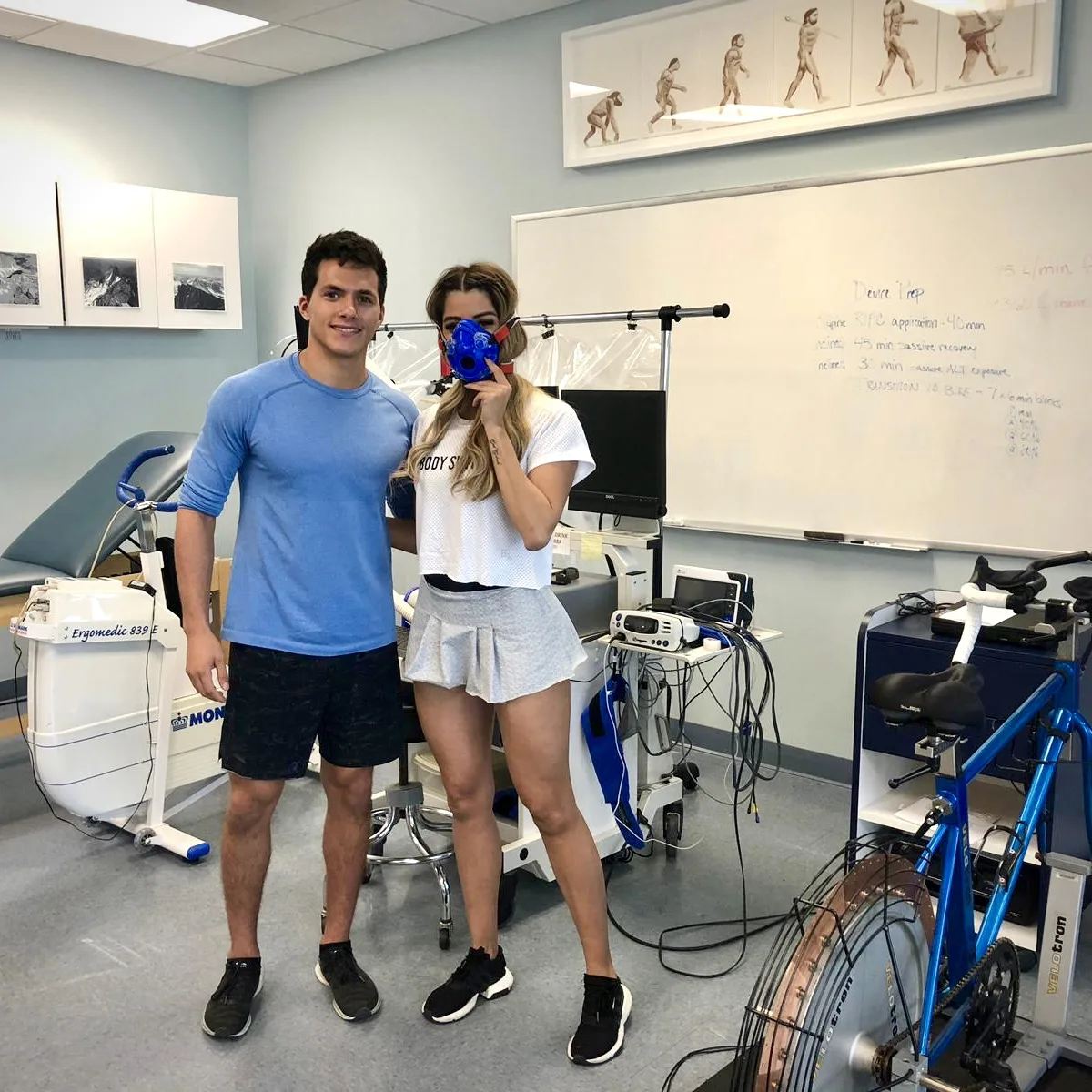
The gold standard is a graded test to exhaustion on a treadmill or bike, wearing a mask that measures the oxygen and carbon dioxide in every breath. The machine is called a metabolic cart. The photo at the top of this article is that test. A watch does something different. It estimates your VO2 max from your pace, your heart rate and its own model of you, and it never sees a single breath.
Apple Watch
Is the VO2 max on an Apple Watch accurate? As a number, no. Three validation studies found it reads low, by 4.5 to 6.3 ml/kg/min, a 13 to 16 percent error. As a trend on one wrist, it's useful.
The first, published in 2025, put a watch on 30 people for five to ten days and then tested them in the lab. It read low by an average of 6.07 ml/kg/min, a 13.31 percent mean absolute percentage error [15]. A 2026 study of the Series 10 on 40 adults found a mean difference of 6.25 ml/kg/min low. The watch put only 5 of the 35 people it classified, 14 percent, into the correct fitness percentile band [16].
A German study of the Series 7 on 19 people found a 15.79 percent error, and it tended to overestimate the least fit and underestimate the fittest [17]. Six ml/kg/min is at least one full decade of age on the table above.
Garmin and WHOOP
Garmin's estimate comes from the Firstbeat algorithm. A 2025 systematic review of 13 studies found it valid or acceptable in seven of them, mostly with a chest strap rather than the wrist sensor [18]. I haven't seen a published validation of the WHOOP estimate, so I won't rate it either way.
On a coaching call on 30 March 2026 I put it to a client like this: the watch is precise, not accurate. It gives the same wrong answer consistently, which makes it useful for the trend on one wrist and useless for comparing yourself with a table. When a client's watch shows a decline but the resting heart rate and HRV are steady and the weight is coming down, I don't buy the decline.
Get the lab number once. Use the watch for the direction between tests. If you want the HRV side of that picture, the heart rate variability guide covers what the trend can and cannot tell you.
How to improve VO2 max when you have no time
The research is unusually clear here, and the shape of a good week is small. Two kinds of session fit around a working life.
Build the base with zone 2
In a meta-analysis of 28 controlled trials in 723 adults aged 18 to 45, steady endurance training raised VO2 max by 4.9 ml/kg/min [19]. The comparison was people who did nothing. The Dallas trial above, which built base sessions and 4x4 intervals together for two years, is the evidence that VO2 max still moves at 53. Zone 2 is the pace at which you can still hold a conversation. The moment talking becomes difficult, you've left it.
I tell clients to aim for two or three sessions a week and to break the total into pieces if that's what the calendar allows. An incline treadmill at a walking pace, a bike, a rower, a stair climber at home: the machine doesn't matter, and you never have to run. Those trials included women as well as men: 120 of the 334 people in the 37-study meta-analysis were women [14]. Where sex changes the reading is the percentile table, not the session. Dr. Joel and I train at the same gym. Thirty minutes of low-intensity steady state a couple of times a week is a change we both made this year.
Add one interval session a week, with long intervals
The same meta-analysis found high-intensity intervals raised VO2 max by 5.5 ml/kg/min against controls, with an extra 3.2 for people who started less fit [19]. The studied shape is the Norwegian 4x4: four minutes hard, at 90 to 95 percent of maximum heart rate, then three minutes easy, four times. The trial ran it three days a week for eight weeks. That protocol raised VO2 max 7.2 percent in moderately trained men, from 55.5 to 60.4 ml/kg/min [1].
Interval length matters. Only long intervals of two minutes or more beat steady moderate training, in a 2019 meta-analysis of 53 randomized trials. That meant at least 15 minutes of work per session over 4 to 12 weeks [20]. The 37-study meta-analysis found the largest gains with intervals of three to five minutes over 6 to 13 weeks [14].
The part most people get wrong is the rest. You rest long enough to go hard again in the next interval. The adaptation we want is a stronger main pump chamber and a bigger stroke volume, and that only comes from repeated high-quality efforts. Short rest and sloppy intervals make you tired, not fitter.
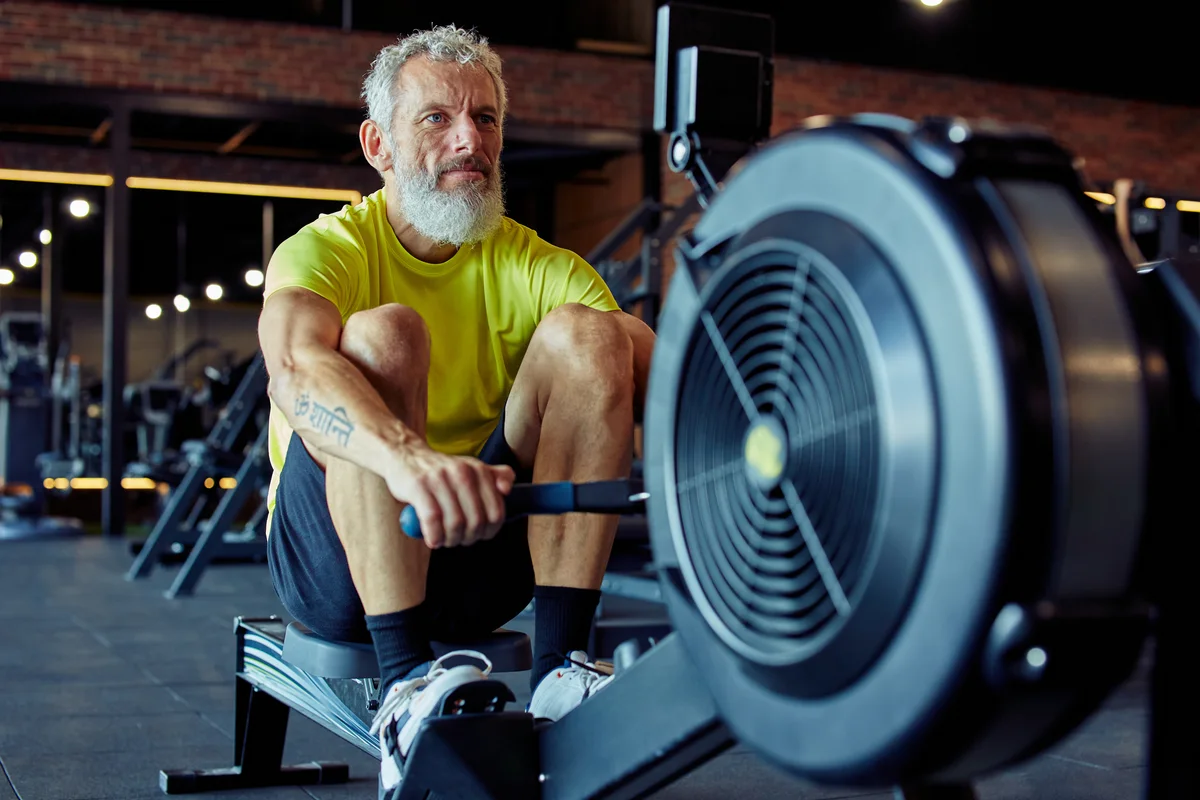
High-intensity intervals are not suitable for everyone. If you have a heart condition, or you're over 40 and new to hard exercise, clear it with your physician first. And it's completely bio-individual. The doses above are where the trials started, not a cookie-cutter prescription. Your recovery, your sleep and your bloodwork decide how much of it you can absorb in a given week.
One client's number: Israel Z.
Israel Z. is a physician, and his is the one case study on this site with a VO2 max number in it. His case study records a VO2 max of 42.4, a 37 percent increase over the program, alongside 24 pounds lost. In his own words: "VO2 max, we started, it was a 31. The highest we got was 43 and now I'm at 42.4." The case study doesn't give his age, or say whether the 42.4 came from a lab test or a watch. So I won't place it on the table for him. Read it as one man's trajectory, not his rank.
A case study isn't a trial. There was no control group, nobody was blinded, and Israel is a motivated physician with a coach reading his data. The literature carries the mechanism; his story shows one application of it, tracked with body composition, VO2 max, wearable recovery metrics and blood sugar awareness. The results presented reflect one individual's outcome and should not be interpreted as typical or guaranteed results.
Actionable steps
- Get your VO2 max measured once, in a lab, with a mask on a metabolic cart. Then use the watch for the trend between tests, not for the number itself.
- Place the lab number on the table above for your age and sex. Below the 25th percentile is the group every cohort in this article flags.
- Build the base: two or three zone 2 sessions a week, 30 to 45 minutes each, at a pace where you can still hold a conversation.
- Add one long-interval session a week. Four minutes hard, three minutes easy, four times is the studied shape. Rest long enough to go hard again.
- Give it 8 to 12 weeks, the length of the trials, before you judge it. Then retest.
- Watch the two numbers that move with it on your wearable: resting heart rate and HRV. If those improve, the watch's VO2 max estimate will follow.
- Remember that it's bio-individual. The protocol is a starting point; your data decides the dose.
If you want to hear the athlete's side of this, the whole conversation with Jeroen Molinger is on episode 68. And if you'd rather not guess at your own VO2 max for another year, apply for a call with me. It's 45 minutes on where you are, what you have tried, and what a plan would look like. Discover your science. Optimize your life.
Supporting Evidence
- Helgerud, J., Høydal, K., Wang, E., Karlsen, T., Berg, P., Bjerkaas, M., Simonsen, T., Helgesen, C., Hjorth, N., Bach, R., & Hoff, J. (2007). Aerobic high-intensity intervals improve VO2max more than moderate training. Medicine and Science in Sports and Exercise, 39(4), 665-671. doi:10.1249/mss.0b013e3180304570
- Mandsager, K., Harb, S., Cremer, P., Phelan, D., Nissen, S. E., & Jaber, W. (2018). Association of cardiorespiratory fitness with long-term mortality among adults undergoing exercise treadmill testing. JAMA Network Open, 1(6), e183605. doi:10.1001/jamanetworkopen.2018.3605
- Kokkinos, P., Faselis, C., Samuel, I. B. H., Pittaras, A., Doumas, M., Murphy, R., Heimall, M. S., Sui, X., Zhang, J., & Myers, J. (2022). Cardiorespiratory fitness and mortality risk across the spectra of age, race, and sex. Journal of the American College of Cardiology, 80(6), 598-609. doi:10.1016/j.jacc.2022.05.031
- Kodama, S., Saito, K., Tanaka, S., Maki, M., Yachi, Y., Asumi, M., Sugawara, A., Totsuka, K., Shimano, H., Ohashi, Y., Yamada, N., & Sone, H. (2009). Cardiorespiratory fitness as a quantitative predictor of all-cause mortality and cardiovascular events in healthy men and women: a meta-analysis. JAMA, 301(19), 2024-2035. doi:10.1001/jama.2009.681
- Lang, J. J., Prince, S. A., Merucci, K., Cadenas-Sanchez, C., Chaput, J. P., Fraser, B. J., Manyanga, T., McGrath, R., Ortega, F. B., Singh, B., & Tomkinson, G. R. (2024). Cardiorespiratory fitness is a strong and consistent predictor of morbidity and mortality among adults: an overview of meta-analyses representing over 20.9 million observations from 199 unique cohort studies. British Journal of Sports Medicine, 58(10), 556-566. doi:10.1136/bjsports-2023-107849
- Clausen, J. S. R., Marott, J. L., Holtermann, A., Gyntelberg, F., & Jensen, M. T. (2018). Midlife cardiorespiratory fitness and the long-term risk of mortality: 46 years of follow-up. Journal of the American College of Cardiology, 72(9), 987-995. doi:10.1016/j.jacc.2018.06.045
- Imboden, M. T., Harber, M. P., Whaley, M. H., Finch, W. H., Bishop, D. L., & Kaminsky, L. A. (2018). Cardiorespiratory fitness and mortality in healthy men and women. Journal of the American College of Cardiology, 72(19), 2283-2292. doi:10.1016/j.jacc.2018.08.2166
- Ross, R., Blair, S. N., Arena, R., Church, T. S., Després, J. P., Franklin, B. A., Haskell, W. L., Kaminsky, L. A., Levine, B. D., Lavie, C. J., Myers, J., Niebauer, J., Sallis, R., Sawada, S. S., Sui, X., & Wisløff, U. (2016). Importance of assessing cardiorespiratory fitness in clinical practice: a case for fitness as a clinical vital sign. A scientific statement from the American Heart Association. Circulation, 134(24), e653-e699. doi:10.1161/CIR.0000000000000461
- Kaminsky, L. A., Arena, R., & Myers, J. (2015). Reference standards for cardiorespiratory fitness measured with cardiopulmonary exercise testing: data from the Fitness Registry and the Importance of Exercise National Database. Mayo Clinic Proceedings, 90(11), 1515-1523. doi:10.1016/j.mayocp.2015.07.026
- Kaminsky, L. A., Arena, R., Myers, J., Peterman, J. E., Bonikowske, A. R., Harber, M. P., Medina Inojosa, J. R., Lavie, C. J., & Squires, R. W. (2022). Updated reference standards for cardiorespiratory fitness measured with cardiopulmonary exercise testing: data from the Fitness Registry and the Importance of Exercise National Database (FRIEND). Mayo Clinic Proceedings, 97(2), 285-293. doi:10.1016/j.mayocp.2021.08.020
- Fleg, J. L., Morrell, C. H., Bos, A. G., Brant, L. J., Talbot, L. A., Wright, J. G., & Lakatta, E. G. (2005). Accelerated longitudinal decline of aerobic capacity in healthy older adults. Circulation, 112(5), 674-682. doi:10.1161/CIRCULATIONAHA.105.545459
- Laukkanen, J. A., Zaccardi, F., Khan, H., Kurl, S., Jae, S. Y., & Rauramaa, R. (2016). Long-term change in cardiorespiratory fitness and all-cause mortality: a population-based follow-up study. Mayo Clinic Proceedings, 91(9), 1183-1188. doi:10.1016/j.mayocp.2016.05.014
- Howden, E. J., Sarma, S., Lawley, J. S., Opondo, M., Cornwell, W., Stoller, D., Urey, M. A., Adams-Huet, B., & Levine, B. D. (2018). Reversing the cardiac effects of sedentary aging in middle age: a randomized controlled trial. Circulation, 137(15), 1549-1560. doi:10.1161/CIRCULATIONAHA.117.030617
- Bacon, A. P., Carter, R. E., Ogle, E. A., & Joyner, M. J. (2013). VO2max trainability and high intensity interval training in humans: a meta-analysis. PLoS One, 8(9), e73182. doi:10.1371/journal.pone.0073182
- Lambe, R., O'Grady, B., Baldwin, M., & Doherty, C. (2025). Investigating the accuracy of Apple Watch VO2 max measurements: a validation study. PLoS One, 20(5), e0323741. doi:10.1371/journal.pone.0323741
- Lambe, R., Schumann, M., Donnelly, L., Hamilton, S., Lally, S., Rafter, E., O'Reilly, S., White, T., & Doherty, C. (2026). Accuracy of VO2 max estimates from Apple Watch Series 10. Mayo Clinic Proceedings: Digital Health, 4(2), 100357. doi:10.1016/j.mcpdig.2026.100357
- Caserman, P., Yum, S., Göbel, S., Reif, A., & Matura, S. (2024). Assessing the accuracy of smartwatch-based estimation of maximum oxygen uptake using the Apple Watch Series 7: validation study. JMIR Biomedical Engineering, 9, e59459. doi:10.2196/59459
- Železnik Mežan, L. (2025). Accuracy of wearables for determining the maximal oxygen uptake and lactate threshold: a qualitative systematic review. Frontiers in Sports and Active Living, 7, 1707991. doi:10.3389/fspor.2025.1707991
- Milanović, Z., Sporiš, G., & Weston, M. (2015). Effectiveness of high-intensity interval training (HIT) and continuous endurance training for VO2max improvements: a systematic review and meta-analysis of controlled trials. Sports Medicine, 45(10), 1469-1481. doi:10.1007/s40279-015-0365-0
- Wen, D., Utesch, T., Wu, J., Robertson, S., Liu, J., Hu, G., & Chen, H. (2019). Effects of different protocols of high intensity interval training for VO2max improvements in adults: a meta-analysis of randomised controlled trials. Journal of Science and Medicine in Sport, 22(8), 941-947. doi:10.1016/j.jsams.2019.01.013